

Za’atar: Food, Medicine, and Memory of Palestine
Za’atar is more than a spice in the Levant. It is a daily ritual, a cultural language, and a memory that travels through generations without needing translation.
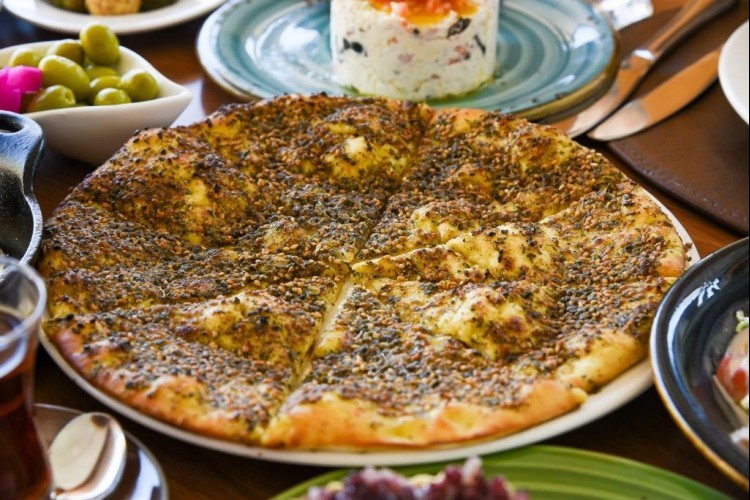
In the kitchens of Palestine, za’atar is not treated as an ingredient—it is treated as presence. It is mixed with olive oil, spread over warm bread, and placed in the center of the table like a shared memory. This simple meal, known as manakish, is often eaten in the early morning before school, before work, before life becomes heavy. It is food that belongs to everyone—children, elders, cities, and villages alike.
But za’atar does not begin in the kitchen. It begins in the land.
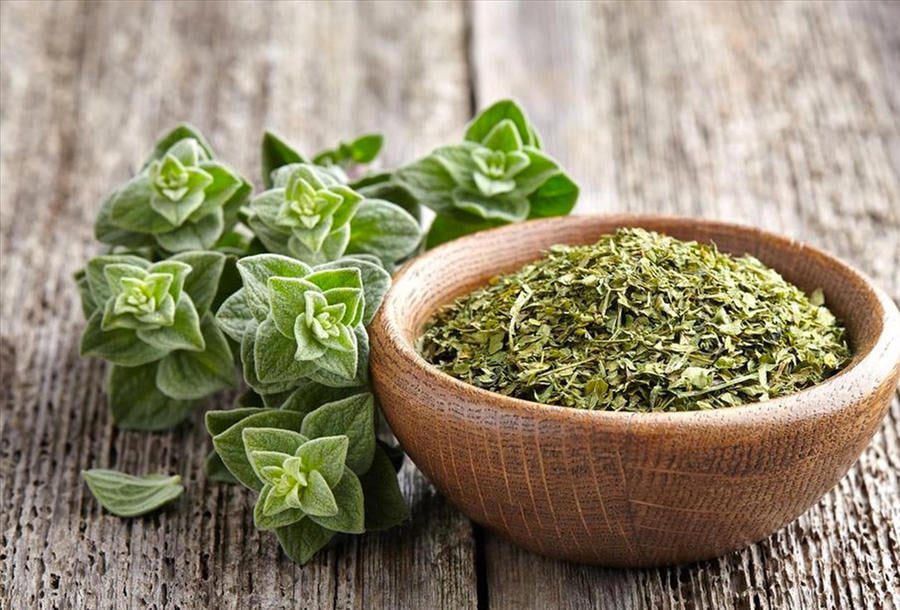
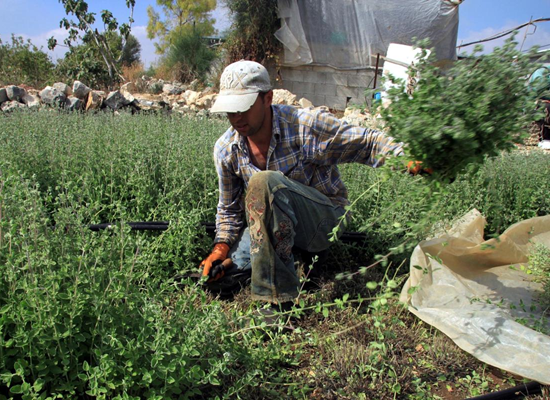
On early mornings in rural hills, families go out to collect wild za’atar from rocky fields. The act of gathering it is slow and careful, because it is not only about harvesting—it is about remembering where it grows. The smell of crushed leaves between fingers is sharp and familiar, like something the body already knows before the mind explains it.
In Palestinian culture, za’atar has become a symbol of endurance and belonging. People often say: “We remain as long as za’atar and olives remain.” This phrase is not just poetic—it reflects a relationship between land and identity, where food becomes proof of continuity.
Za’atar is also part of everyday speech and imagination. It appears in proverbs, in lullabies, in poetry written on bus rides and in refugee camps. It is not reserved for special occasions. Instead, it is woven into ordinary life, which is exactly why it feels so important.
In traditional kitchens, za’atar is often prepared in different ways. Some mix it with olive oil until it becomes a thick green paste. Others dry it and store it in cloth bags, opening them in winter when fresh herbs are gone. Some families mix it with sesame and salt, adjusting the taste slightly from home to home, village to village. Each variation is small, but each one carries identity.
Beyond food, za’atar has long been used in traditional herbal practices across the Levant. It is brewed as tea, believed to bring warmth and comfort. It is combined with olive oil, honey, or black seed in home remedies passed down through generations. While modern science studies some of its properties, much of its value remains cultural—based on trust, experience, and memory rather than measurement.
But perhaps the most powerful role of za’atar is not what it does to the body, but what it does to memory.
For many Palestinians, the taste of za’atar is the taste of home—even for those who live far away. A single bite of bread with za’atar can bring back kitchens that no longer exist, streets that have changed, and mornings that belong to another time. Food becomes a way of carrying place when place itself becomes complicated.
In songs, weddings, and celebrations, za’atar appears again and again. At weddings, it is part of breakfast tables shared before the ceremony begins. In songs, it is used as a metaphor for strength, simplicity, and rootedness. It is never just decoration—it is always meaning.
Even in moments of displacement, za’atar travels. It is packed in small bags inside suitcases, wrapped carefully in cloth, or bought in foreign markets that try to recreate its taste. But people often say the same thing: it is never exactly the same. Because what is missing is not the herb—it is the land it came from.
Today, za’atar continues to exist across the Levant and beyond. It is sold in markets, served in restaurants, and shared in homes around the world. But in every place it reaches, it still carries its origin quietly within it.
It remains simple. It remains ordinary. Yet it carries something that cannot be simplified.
Zeyt and Za’atar
In Palestinian homes, za’atar is never eaten alone. It is always accompanied by olive oil—zeyt—forming a simple ritual that feels almost sacred in its simplicity.
A small plate is placed on the table: green za’atar on one side, golden olive oil on the other. Bread is torn by hand, never cut, and dipped first into the oil, then pressed into the za’atar. In that moment, the bread becomes more than food—it becomes a bridge between earth and memory.
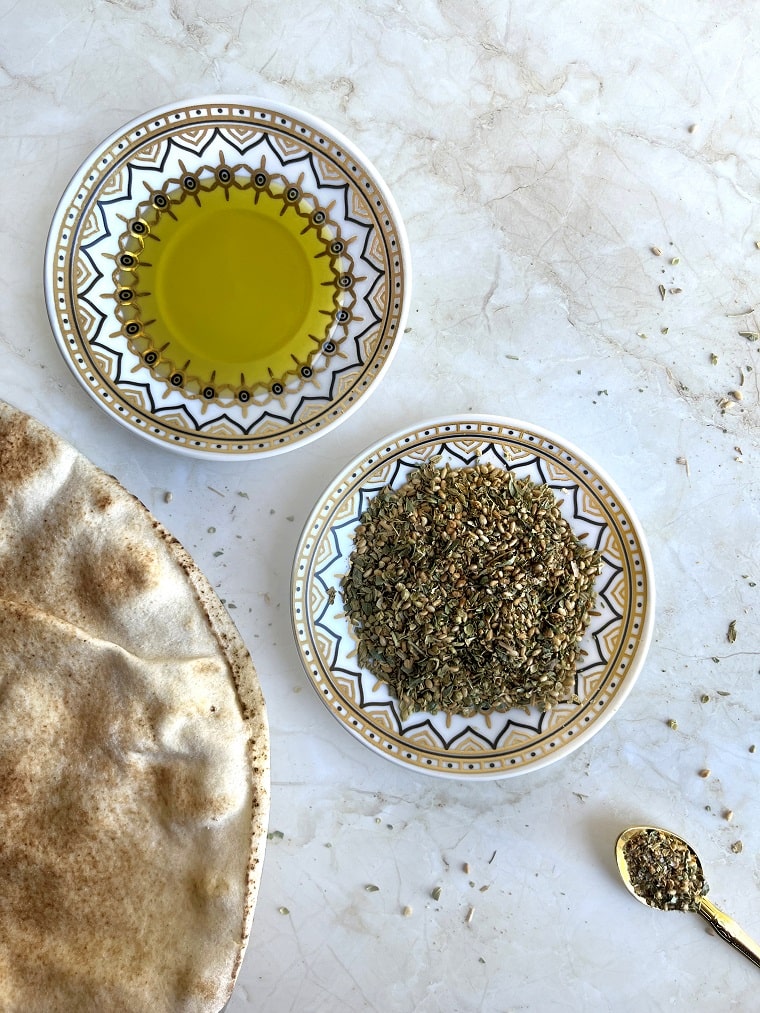
This combination is not just about taste. It is about balance. The sharpness of za’atar meets the softness of olive oil, creating something that feels complete. Families eat it slowly in the morning, often in silence or in light conversation, as if the act itself deserves attention.
Children grow up learning this rhythm without being taught. Dip, press, eat. Repeat. It becomes instinctive, like a shared language passed through hands rather than words.
For many Palestinians, zeyt and za’atar is the first taste of home and often the taste that remains strongest in memory when everything else changes. It is simple food, but it carries the weight of belonging.
Manakeesh za’atar
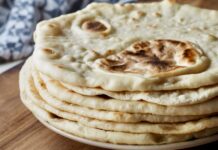
Manakeesh za’atar is one of the most common and beloved breakfasts in the Levant, especially in places like Beirut, Damascus, and across Palestinian towns. It is made from simple dough that is flattened by hand and topped with a mixture of za’atar and olive oil, creating a green paste that is spread generously over the surface before baking. The bread is then placed in a hot stone oven until it becomes soft, warm, and slightly crispy at the edges, filling the streets with its smell early in the morning. People usually eat it fresh and hot, often standing outside bakeries, on their way to school or work, or sharing it quickly with family. For many, manakeesh za’atar is not just food but a daily ritual that connects them to home, memory, and the rhythm of everyday life.