








The story of Om Ali isn’t just about a creamy bread pudding; it’s a 13th-century tale of power, jealousy, and cold-blooded revenge that unfolded in the heart of Mamluk Egypt.
The story begins with Sultan Izz al-Din Aybak, the first Mamluk ruler of Egypt. He had two wives:
- Om Ali: His first wife and mother of his heir, Ali.
- Shajar al-Durr: A brilliant, ambitious former slave who became a powerful Sultana in her own right.
The tension peaked when Shajar al-Durr, feeling her power threatened by the Sultan’s plans to take a third wife, had him murdered in his bath.
The Revenge: Death by “Qabaqib”
Om Ali didn’t just want justice; she wanted a public downfall for her rival. She conspired with her bondmaids, who cornered Shajar al-Durr and famously beat her to death using “Qabaqib”—traditional heavy wooden clogs.
With her rival gone, Om Ali’s son, Ali, was crowned the new Sultan.
The Celebration: A Golden Victory
To celebrate her son’s coronation and the “sweetness” of her revenge, Om Ali ordered the cooks to create a dessert unlike any other to feed the entire city of Cairo.
The Recipe for Victory:
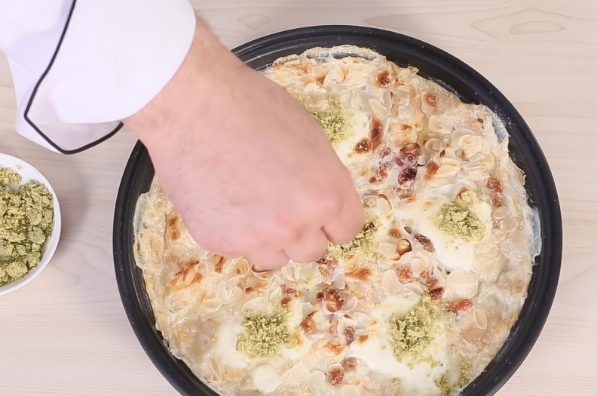
- They took sheets of flaky pastry (Roqaq) and tore them into pieces.
- They drowned the pastry in boiling sweetened milk.
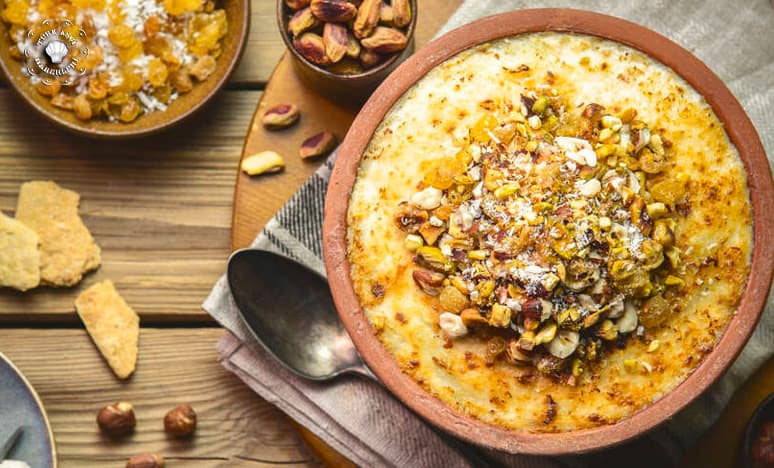
- They added a lavish amount of heavy cream, raisins, and nuts (almonds and pistachios).
- The pots were baked until the top formed a golden, bubbly crust.

As the massive pots were carried through the streets of Cairo, people asked, “What is this?” The servants replied, “This is the dish of Om Ali!”
The Legacy
Today, Om Ali is Egypt’s national dessert. It is served warm, symbolizing the warmth of a home, but its origins remain a reminder of a time when Egyptian politics were as rich—and as dangerous—as its cuisine.